
Forest fires have ravaged Peru in recent years, with thousands of hectares of tree cover lost. Despite this, some Indigenous communities are actually seeing a decline in blazes. Meet the forest protectors of Paamari
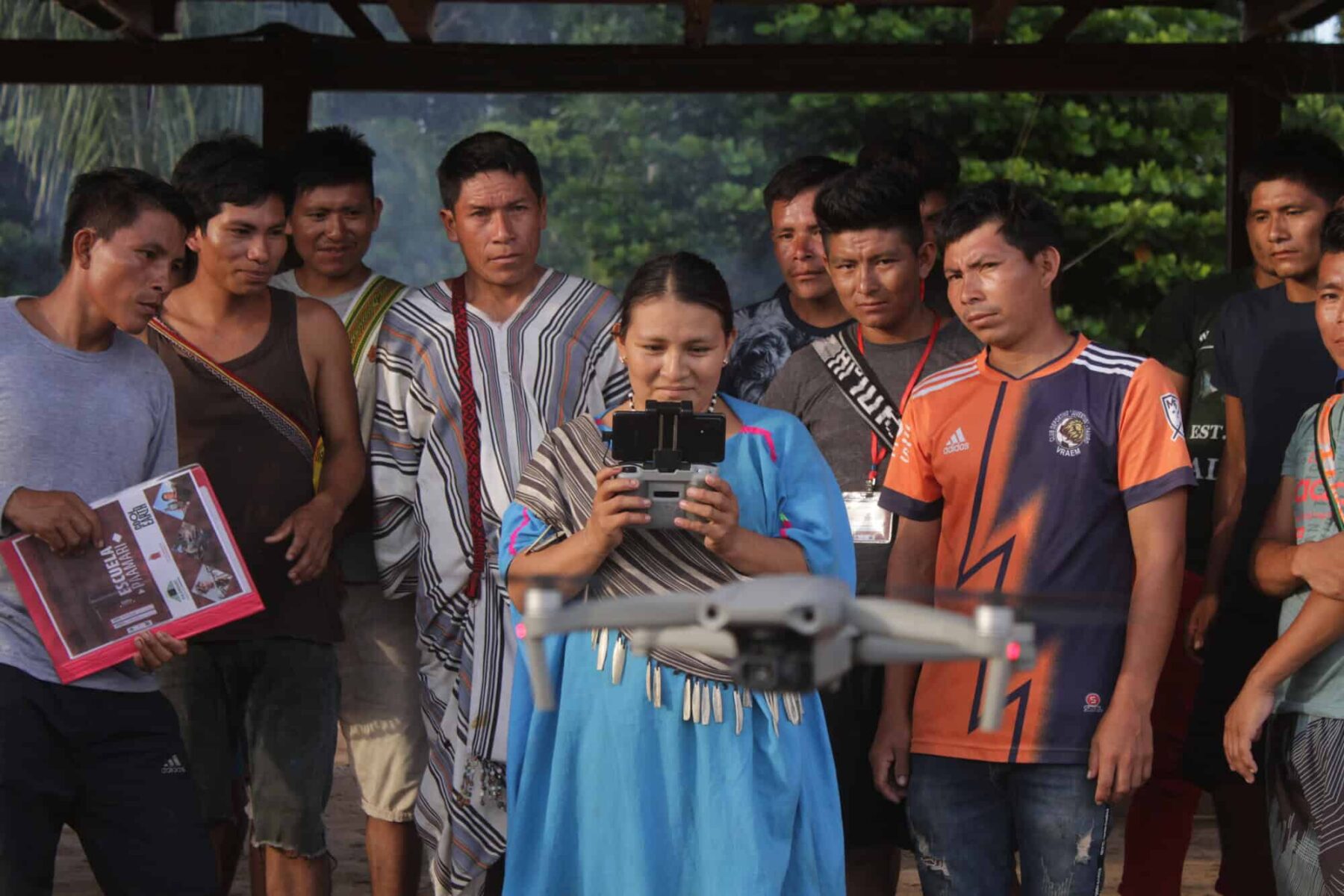
When smoke begins to rise in Osherato, Peru, it is often Romer Quentimari Garcia who is observing. He’s part of the Indigenous Asháninka community that is based there, near where the rivers Ene and Tambo meet. But he’s not just watching as a community leader. As a certified brigadista, he’s armed with real-time satellite imagery, drones and radio systems to help find and extinguish fires before they take hold.
“Over these past few years, we’ve been keeping a close watch,” he says. “We’re observing the changes across all the communities and whenever we see smoke appearing, we go out to check whether it’s a wildfire or a controlled burn. We support to put the fire out faster, because in each community, we are all brothers. We are the ones who take care of the forest.”
Quentimari Garcia is one of hundreds of community members trained through the Paamari programme. Taking its name from the Asháninka word for fire, it’s a unique collaboration between the Central Asháninka of the Ene River (CARE) and Cool Earth, a charity that supports Indigenous communities tackling the climate crisis.
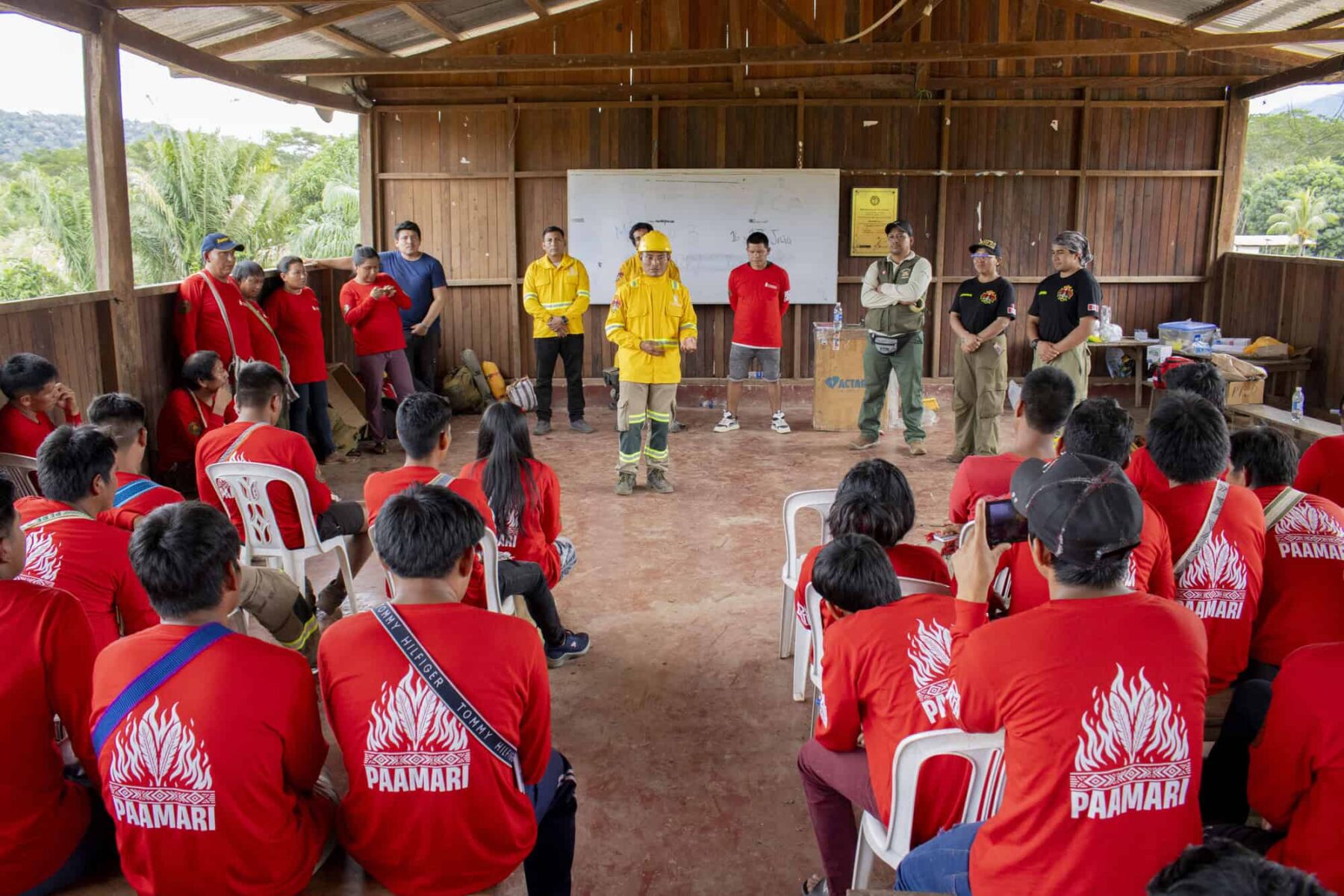
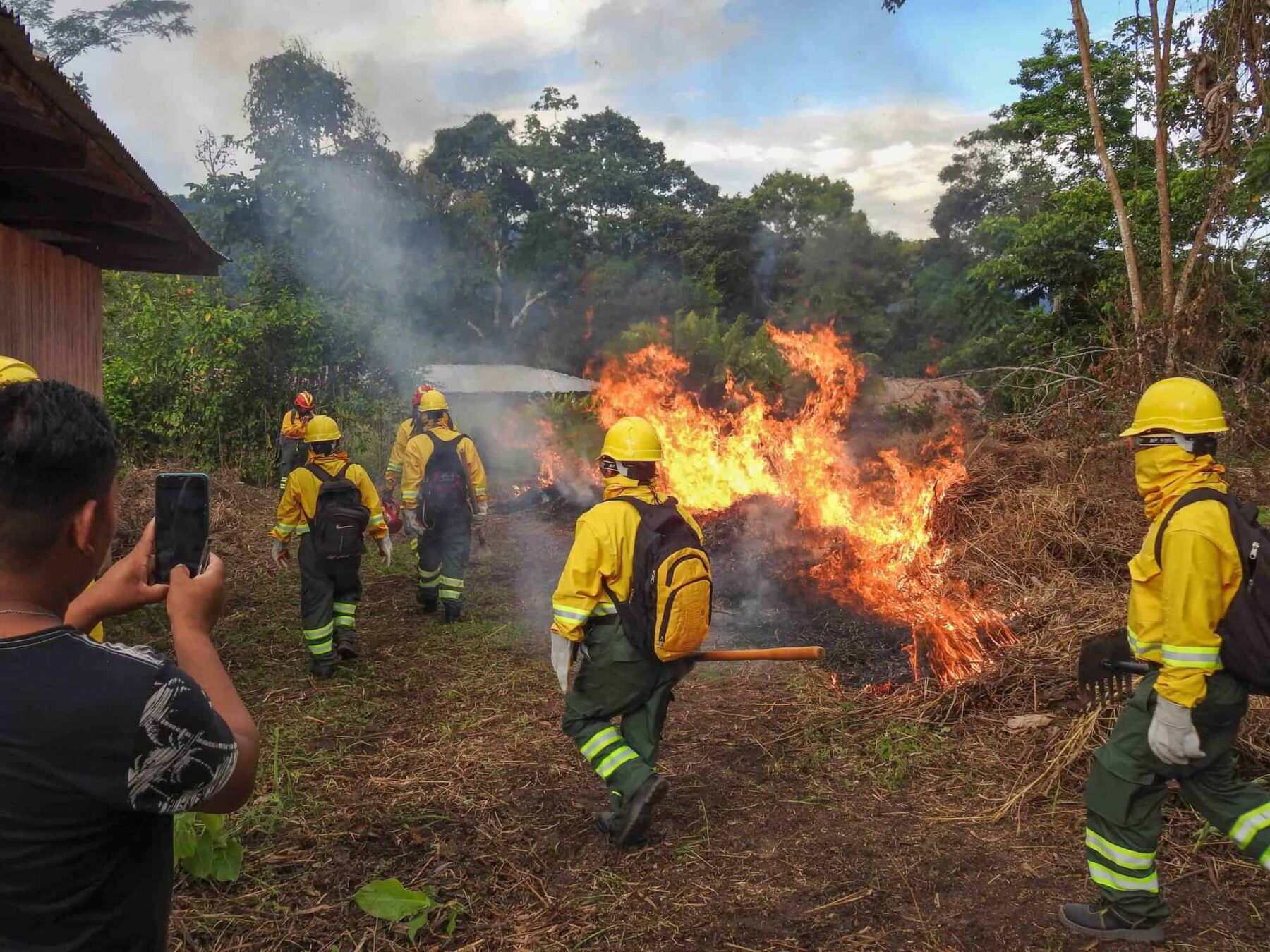
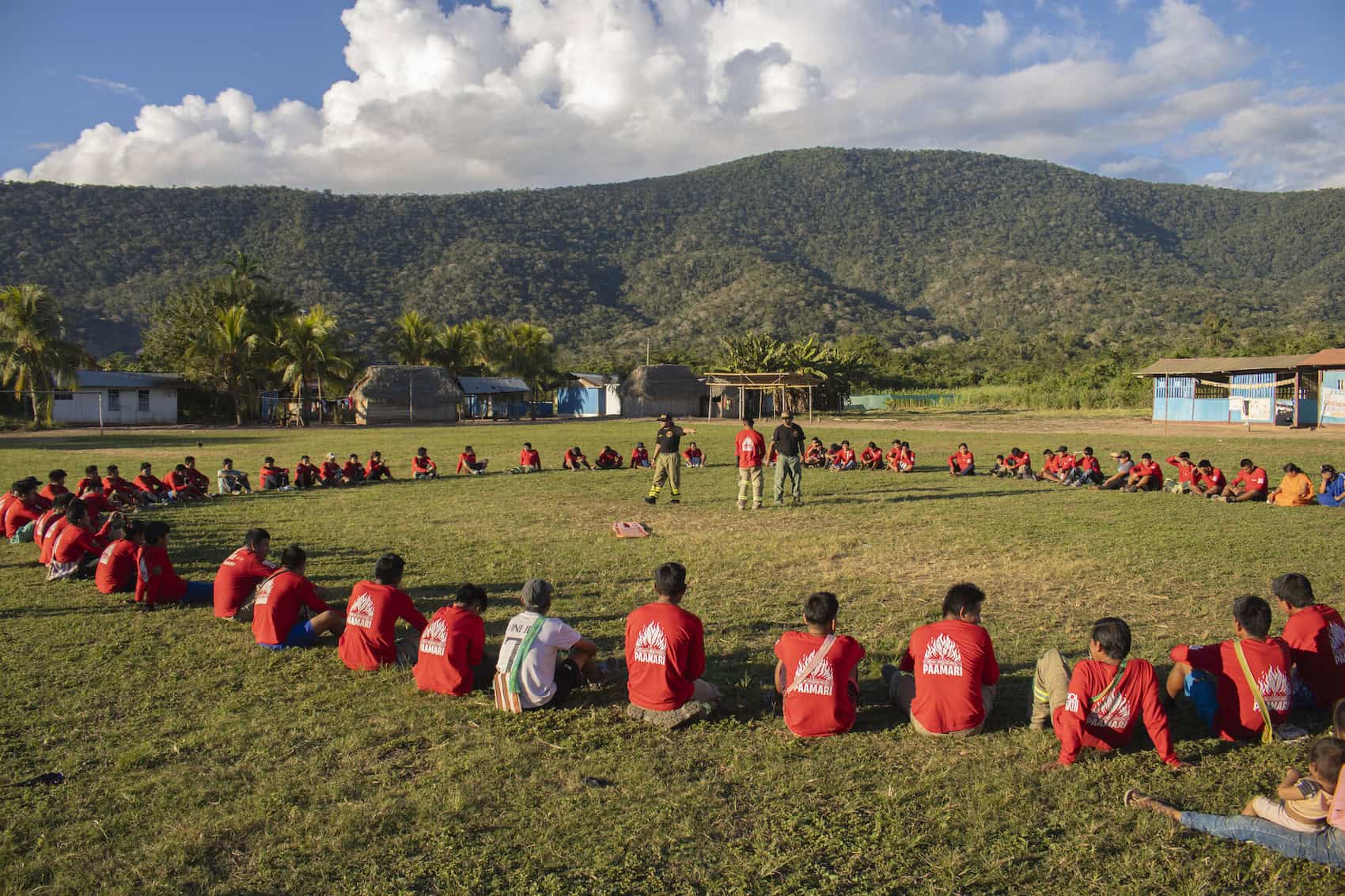
The project launched in 2023 and combines prevention strategies and early warning systems with safe burning practices and rapid responses. Wildfires across the 45 communities that are part of CARE have dropped from 25 in 2023 to nine in 2024. This represents an area of 2,648 hectares burned to just 492 hectares, an 81% reduction. In 2025, there were no wildfires in the territory at all, with communities successfully extinguishing a number of threats.
It’s a statistic that’s surprising when considered against wider climate trends. Just two years ago, the Peruvian government declared a state of emergency after an unprecedented drought triggered the worst season of wildfires the country had ever seen. More than 10,000 fires were recorded and 63,000 hectares of tree cover lost as a direct result, an area larger than Chicago. Not only do these fires decimate vital habitats, but they also destroy carbon sinks, which are crucial as global temperatures rise.
Similarly, record-breaking temperatures across Europe have seen two devastating years of wildfires, with more than 300,000 people across France, Spain and Portugal forced to evacuate their homes this summer. In 2025 alone, the European Commission estimated fires had ravaged an area the size of Cyprus. So, how is Paamari managing to succeed against the odds?
For David Torres, a coordinator and monitoring specialist with CARE, the key to the project’s success is how it combines centuries-old Indigenous knowledge with high-tech equipment. “Modern tools and modern equipment are very important, but that has to be integrated with traditional knowledge, the knowledge that brigadistas have of their own territory,” he explains.
This becomes even more important in areas where difficult terrain can make it impossible for national fire crews to respond quickly. There, Indigenous communities act as both the first and last line of defence. This counters some governmental policies, which have been criticised for a lack of understanding of ancestral knowledge. For example, all forms of burning are prohibited unless communities gain an exemption or permit, including prescribed burns that are a traditional part of crop management. The government relies on punitive measures to enforce this, with the threat of prison sentences, community service and fines.
Julio Acosta is the forest data manager at Cool Earth and agrees that meaningful collaboration with communities is key. “If you want to ensure that a project sustains over time, I think it’s important that local people are going to own that project,” he says. “You need to involve local communities on the design, so that they feel it’s part of their community, that it’s something they really want to do. Otherwise, it will always depend on the external actor that brought that idea. When the project ends, that’s when the real challenge comes.
It’s important to take care of our forest. That’s where we get our wood, our crafts, our crowns. The forest is life
The charity is using that ethos as it extends its work in fire prevention with other communities outside CARE’s area of operation. With the threat of what some scientists are calling a ‘Godzilla’ El Niño on the horizon, Cool Earth will expand its fire training initiatives to the nearby communities of Cutivireni and Oviri, with Indigenous people again taking the lead role.
There is growing academic evidence for the value of Indigenous-led conservation. In 2026, researchers from the University of British Columbia published an analysis of 111 peer-reviewed papers, focused on the relationship between Indigenous peoples and conservation efforts. It found overwhelmingly that Indigenous-[managed] lands “delivered outcomes at levels comparable to or exceeding those of protected areas”. The authors added that “evidence showed that this collective stewardship ethic is robust and can have long-lasting conservation outcomes”.
Acosta also points to Cool Earth’s unconditional transfer scheme, where cash is sent directly to people living in rainforests, giving them full autonomy over how it’s spent. However, he’s keen to stress that these programmes aren’t a silver bullet, with more aligned support from governments needed. “Forest fires are just one part of the problem,” he adds, referencing mining, logging and illicit crops as other key drivers of deforestation in the Amazon. But while it’s a complicated problem, he believes wildfire management is part of the solution. “This is just one way of addressing this,” he concludes.
For Romer Quentimari Garcia though, it all comes back to a circular view of life. “It’s important to take care of our forest. That’s where we get our wood, our crafts, our crowns. That’s why it is important to us, to conserve what we have in our culture. The forest is life.”
Images: Cool Earth
Main image: participants in the Paamari programme are trained how to use drones to help detect wildfires.