A malaria vaccine cut child deaths, ocean defenders triumphed in court, and electric trucks took off, plus more good news
This week’s good news roundup
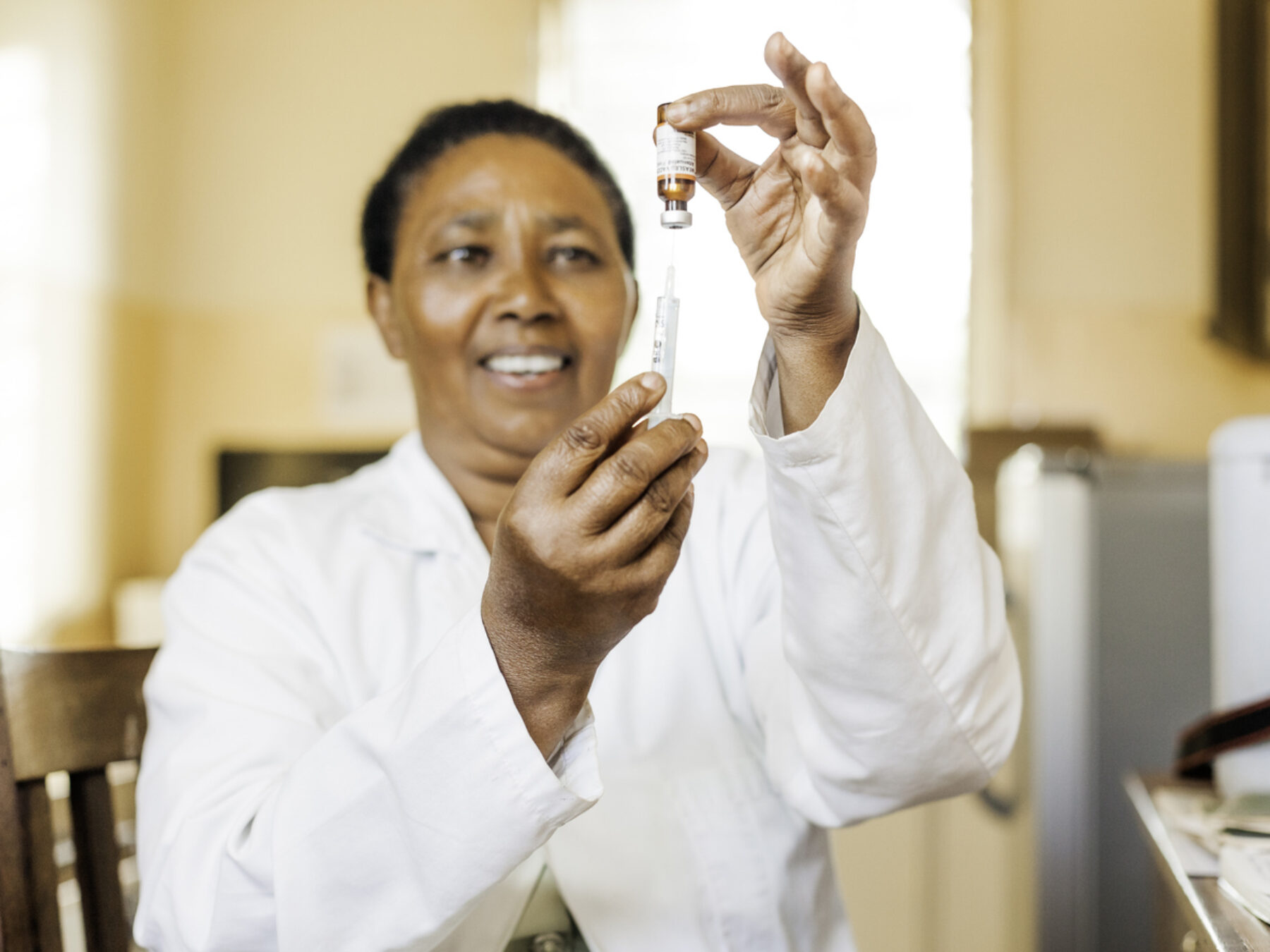
African countries that were first to roll out a breakthrough malaria vaccine have seen a “significant reduction” in child deaths, a landmark report found this week.
Malaria kills around 600,000 people annually, most of them in Africa, and most of them children. However, the RTS,S malaria jab, which performed well in clinical trials, is now having a positive impact on the ground, the research showed.
Published in the Lancet health journal, the study observed infant mortality rates over four years in Ghana, Kenya, and Malawi after they introduced malaria vaccinations for children. One in eight child deaths, it noted, had been avoided in the countries since the jab was rolled out.
Twenty-five African countries now offer malaria vaccinations to children. Researchers expect similar results, or better, in countries that took up the vaccine more recently. Other vaccines are in development.
“This is very solid evidence of the potential for malaria vaccines to change the trajectory of child mortality in Africa,” said the World Health Organization’s Dr Kate O’Brien, co-author of the evaluation.
Challenges remain, however. “More financing is needed so that countries can purchase enough vaccine, along with other malaria prevention tools, to reach all the kids most at risk,” she said.
Image: Annie Spratt
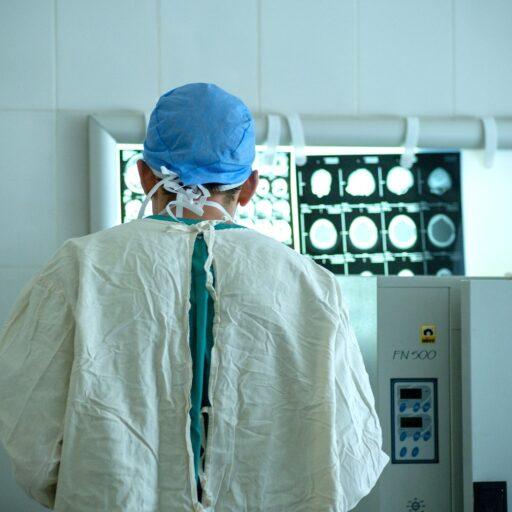
Most diagnoses for pancreatic cancer currently come too late for treatment to be effective, but artificial intelligence (AI) could be about to change that.
In a study, an AI model helped radiologists to detect signs of the disease up to three years before a clinical diagnosis – a development that could save many lives.
Pancreatic cancer is one of the deadliest cancers. More than 85% of patients receive a diagnosis after the disease has spread, and five-year survival rates are below 15%, according to the National Cancer Institute in the US.
“The greatest barrier to saving lives from pancreatic cancer has been our inability to see the disease when it is still curable,” said Ajit Goenka a radiologist from the Mayo Clinic in Minnesota, US, which developed the model. “This AI can now identify the signature of cancer from a normal-appearing pancreas.”
Further tests are before the model is rolled out.
Image: Mitrey
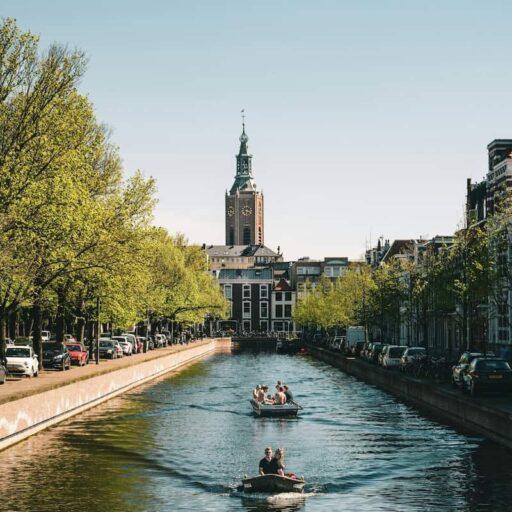
In a landmark case that will ripple across Europe, a Dutch court has ruled that bottom trawling in a marine protected area is unlawful.
Hitherto, the Dutch government has given trawlers a free pass to plunder the Dogger Bank protected area without a permit or environmental assessment.
However, this week a district court in The Hague (pictured) ruled against the status quo. It’s the first known ruling in Europe where a court has confirmed that governments have a responsibility to regulate the impact of bottom trawling on protected areas.
The verdict piles pressure on other European nations to phase out bottom trawling in protected areas. Greece has already announced a ban.
“This is a landmark legal ruling for ocean protection, which is set to make waves across Europe,” said John Condon, a senior lawyer at ClientEarth, which brought the case. “The Dutch court has unequivocally confirmed that bottom trawling in protected areas cannot be ignored – ‘protected’ means protected.”
Image: Dustin Bowdige

In a win for workers rights, employees in the US state of Virginia will soon be entitled to up to 12 weeks paid leave if they give birth, need long-term healthcare, or are caring for poorly family members.
While federal law obliges companies with 50 or more workers to allow for 12 weeks medical leave, it doesn’t require workers to be paid.
Virginia is the 15th state to mandate paid medical and family leave after a bill was signed into law on Monday. The programme, due to be up and running by 2028, will also allow up to four weeks of ‘safe leave’ for survivors of domestic violence, sexual assault or harassment.
While the initiative will receive some state funding to get going, it will ultimately be jointly funded by employers and staff. Critics claim it will pile more costs onto businesses, backers say it will be a lifeline for families in times of need.
States that already mandate paid medical and family leave include California, New York and Minnesota.
Image: Kelly Sikkema

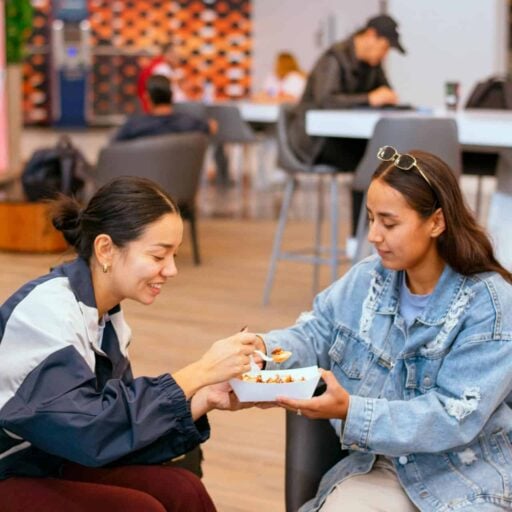
University canteens across France have introduced three-course meals for €1 (£0.87) to address financial hardship among students.
The meal deal follows research showing that 48% of French students have gone without food for financial reasons, according to local media.
The €1 scheme was previously only available to students receiving financial aid, but has now been made universal. The French government promised €120m (£104m) to back the programme.
“It is a small internal revolution,” French higher education minister Philippe Batiste told France 24.
Image: César O’neill
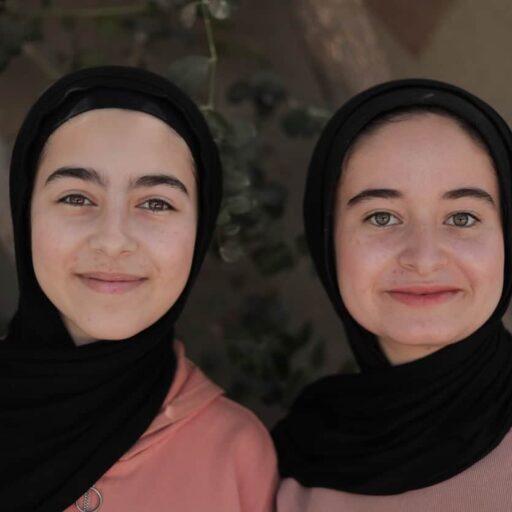
Their home was bombed and they live in a tent, but despite enduring acute hardship and fear of further bombings, two Gazan sisters have won an award for an innovation that could help Palestinians rebuild their communities.
Amid devastating air strikes on their homeland by Israeli forces, Tala Mousa, 17, and sister Farah, 15, developed a technique to transform rubble from damaged buildings into reusable, non-load-bearing blocks for applications such as garden beds, pavements, and partitions.
The process involves crushing and sieving debris, mixing it with binders such as clay, ash, and glass powder, then moulding and drying it into blocks.
It’s an idea that this week saw the sisters (pictured) named Middle East Winners in the Earth Prize 2026 – a global environmental competition and incubator for teens. The pair now hope to pass on the technique to their fellow citizens in war-torn Gaza.
“The view from our tent window is what keeps us always motivated,” said Tala. “The large amount of rubble and the lack of accessible rebuilding solutions inspire us to work on this project … and turn what was once destruction into a starting point for hope.”
See the other winners here.
Image: Ali Awad
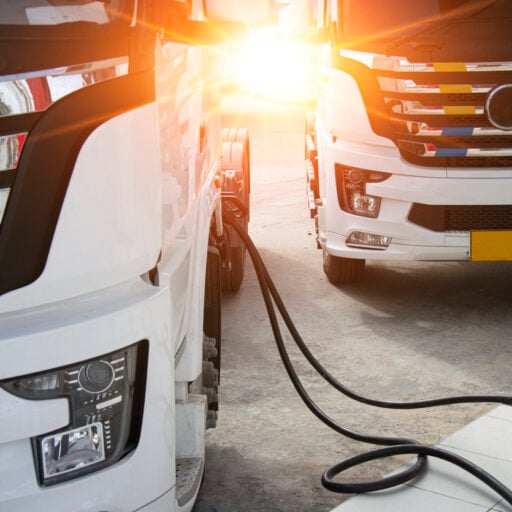
Sales of electric lorries surged in China last year – and are accelerating further as the fallout from the Iran war continues.
According to analysis by Bloomberg, electric truck sales in China tripled in 2025, and now make up 20% of new truck registrations.
Meanwhile, separate data from Reuters suggests that electric truck sales rose by 45% in the first quarter of 2026 amid spiralling diesel costs sparked by Iran’s blockade of the Strait of Hormuz.
Electrifying heavy goods vehicles (HGVs) is key to tackling the climate crisis. While efforts to decarbonise the roads are often focused on cars, HGVs account for a large share of road related emissions – around 17% in the UK – despite making up just 1% of traffic.
China’s e-truck sales figures are the latest sign that the war in Iran is accelerating the transition away from fossil fuels.
Image: iStock
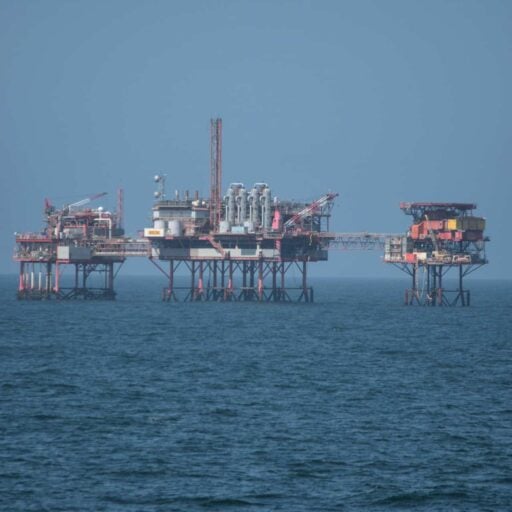
The UK government has announced a ban on all new exploration licences for oil and gas in the North Sea – a move welcomed by environmental groups but criticised by opposition parties.
The energy crisis sparked by the Iran war has increased calls from some quarters for the UK to drill more oil and gas in the North Sea, despite evidence suggesting it would make no difference to household energy bills.
“If the recent turmoil has taught us anything it’s that relying on fossil fuels – whether from the North Sea or Gulf states – will only leave us at the mercy of foreign wars and dictators,” said Greenpeace UK’s co-executive director Areeba Hamid. “The government deserves credit for holding firm while many politicians and commentators are trying to turn climate action into a scapegoat.”
However, Scottish Conservative leader Russell Findlay described the ban as a “crazy decision” and “a kick in the teeth for Scotland’s proud oil and gas workers”.
Leading climate scientists have repeatedly warned against new oil drilling in the North Sea.
Image: Rob Barber
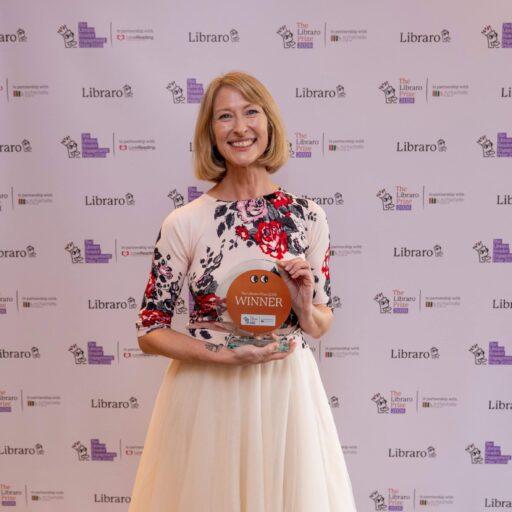
A literary prize launched to help writers sidestep traditional barriers to getting published has revealed its first winner.
Sheep’s Clothing by Donna Fisher (pictured) is a provocative story about the public cancellation of a celebrated man – and the people in his orbit. Judges for the Libraro prize described it as “well-written, provocative and timely”, commending its “compulsive, page-turning quality and strong narrative voice”.
Fisher, a British writer living in Australia, wins a £50,000 prize and the option of a book deal with Hachette.
The Libraro prize is unlike other literary gongs because it gives readers, rather than industry gatekeepers, a role in championing emerging talent. Bookworms read hundreds of manuscripts and create a shortlist from which a winner is chosen by a judging panel. A £10,000 prize also went to reader Holly Hughes for engaging most with submissions.
“When Libraro launched, the goal was simple: to give undiscovered writing a fair shot at being seen, recognised, and backed by real readers,” said Arsim Shillova, founder of Libraro. “When you put readers at the centre of discovery, exceptional stories surface.”
Image: Libraro Prize
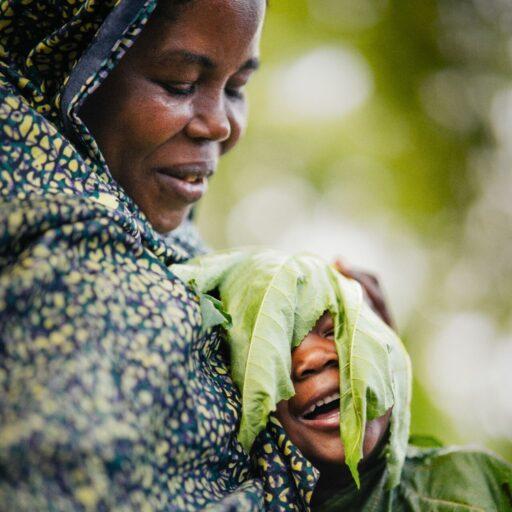
A portrait of a Tanzanian mother using indigenous medicine to treat her child is among the images shortlisted for a global photography award.
Sometimes heartwarming, sometimes tragic, the Earth Photo shortlist captures some of the defining environmental and political stories of our time; from retreating glaciers and immigration detention centres, to habitat restoration efforts and communities recovering from conflict.
While the fragility of our world, and the damage done to it, is brought into sharp focus by the pictures, there is a hopeful thread running through many submissions.
Now in its eighth year, Earth Photo was launched by the Royal Geographic Society to “celebrate innovative visual storytelling that encourages conversations about our world and the challenges it faces”.
The winners will be announced on 2 July.
Image: Filbert Minja/Earth Photo 2026
Main image: ranplett/iStock
Get your weekly fix of good news delivered to your inbox every Saturday, by signing up to the Positive News email newsletter
Be part of the solution
At Positive News, we’re not chasing clicks or profits for media moguls – we’re here to serve you and have a positive social impact. We can’t do this unless enough people like you choose to support our journalism.
Give once from just £1, or join 1,800+ others who contribute an average of £3 or more per month. Together, we can build a healthier form of media – one that focuses on solutions, progress and possibilities, and empowers people to create positive change.