The fresh case for a four-day week, China’s better-then-expected emissions forecast, and London’s erotic garden, plus more good news
This week’s good news roundup

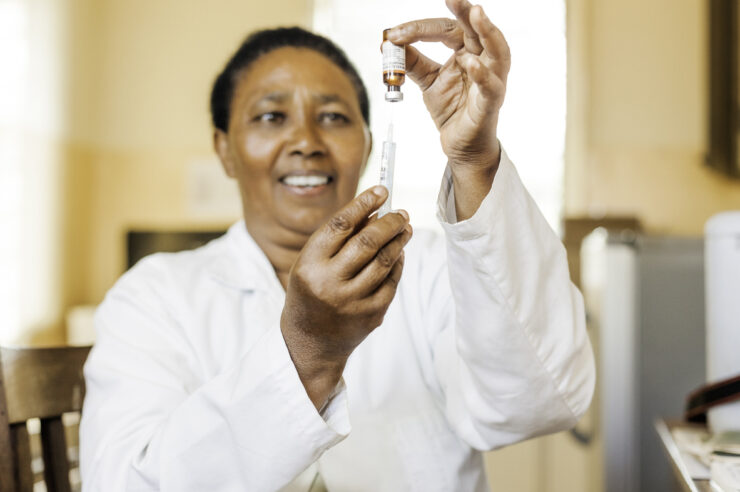
The results of an Australian four-day week trial are in, and show that almost half the firms involved saw an increase in productivity.
Between 2022 and 2023, 15 Australian companies trialled the 100:80:100 four-day week, which sees workers get 100% of their pay, while working 80% of their previous hours, in exchange for maintaining 100% of their previous output.
New research, published in Nature, found that all but one of the participating companies stuck with the four-day week after the trial. The firms involved operated across a range of industries, from property management to publishing.
Echoing the results of similar trials elsewhere, six businesses involved reported an increase in productivity, with the rest reporting no difference.
“As we grapple with high workplace burnout, and societal challenges about what to do with the productivity gains we’re predicted to get from AI, a four-day work week could be an interesting part of both those conversations,” said study lead, Prof John Hopkins of Deakin University.
While evidence increasingly suggests that four-day weeks boost productivity, reduce staff turnover and improve employee wellbeing, critics question whether the benefits can be sustained long-term. A growing number of companies are about to out.
Related: The results of the world’s largest four-day week trial are in – and it’s good news
Image: Luke White

The world’s biggest polluter is underpromising and overdelivering when it comes to cutting emissions, a global energy review has found.
The New Energy Outlook 2026, published by BloombergNEF on Tuesday, puts China on track to reduce emissions by 17% this decade from their 2023 peak. That’s a significant improvement on the 7-10% reduction that China committed to delivering by 2035.
Bloomberg predicts a 50% fall in China’s emissions by 2050. Keeping global heating to below 2C, however, requires steeper cuts, scientists say.
The report comes amid sky-high fossil fuel prices due to the fallout from the Iran war. Acknowledging the geopolitical tumult, Bloomberg said that countries reliant on imported fossil fuels were accelerating their shift to renewables.
Will it be enough? Under its best case scenario, the report says that the window for keeping warming below 1.5C “has passed” – a view held by many scientists. But it claims there is still “a credible” pathway to keeping peak temperature rises to 1.81C.
The latest Emissions Gap Report from the United Nations Environment Programme had a less optimistic outlook, predicting 2.3C-2.5C warming by the end of the century without greater ambition.
Related: 12 obvious ways to reduce emissions that nobody is talking about
Image: Nikada

In a historic move, French lawmakers have approved legislation making it easier for cultural artefacts appropriated during colonial times to be returned to their country of origin.
France, like many imperial powers, plundered artefacts from all over the world as it conquered new lands. Many of them are now on display in western museums, fuelling an ongoing debate about the repatriation of stolen works.
The new law gives the French government the power to approve the return of looted artefacts by decree, rather than requiring a specific law for each case.
France is not the first European nation to confront its appropriation of cultural artefacts. In 2021, the Dutch government published guidelines to make it easier for former colonies to reclaim stolen artefacts. Indonesia did so in 2024, reclaiming works from Rotterdam’s Wereldmuseum.
Image: Eunsong Jo

All secondary school pupils in Wales whose parents receive universal credit – a low-income living support – will be entitled to free school meals from September, the Welsh government has confirmed.
Currently only secondary school pupils in households with a net annual income below £7,400 can claim free school dinners. The new policy scraps that threshold, bringing it in line with neighbouring England. All primary school children in Wales get free school meals.
Announcing the policy on Tuesday, Welsh first minister Rhun ap Iorwerth said that it was about “supporting students’ learning and giving families one less cost to worry about”.
It comes as neighbouring England prepares for an overhaul of school dinners. Last month, the government launched a consultation on plans to ban sugary snacks and processed foods from school dinners, and replace them with healthier options.
Image: Robert Kneschke


An oyster reef is taking shape off the coast of southern England after volunteers dropped more than 20,000 of the mollusks onto the seabed.
The people-powered project aims to restore a critical marine ecosystem along Chichester Harbour by reintroducing oysters to an artificial reef made of shells and gravel.
The 3.5-hectare restoration initiative is led by the Blue Marine Foundation, which said that the new reef would provide habitats for myriad species and improve water quality. Oysters are renowned filterers of water.
“This project is immensely important as it not only helps nature, but it helps people as well,” Dr Luke Helmer, Blue Marine’s restoration science manager, told Positive News.
A welcome side-effect of the project, he added, is how it brings people together. “It is so lovely to see the number of genuine connections made between people from all walks of life, all coming together for a united cause,” he said.
More oyster drops are planned over another 2.5 hectares of the harbour. It’s not the only such project in England. In Norfolk, some four million oysters are set to be returned to the seabed in another major restoration initiative.
Image: Blue Marine Foundation

While the poor state of England’s rivers has become a national scandal, one community shows what’s possible for river restoration – and has received an award for its efforts.
For more than a decade, a stretch of the Mease, which flows through Leicestershire, Derbyshire, and Staffordshire, has been the subject of a community led river recovery project.
In collaboration with farmers, who were compensated to cede land along the Mease’s banks, grassroots conservationists removed invasive species, tackled pollution and created new habitats along a 10-mile stretch of the waterway, breathing new life to the once-depleted river.
Their efforts, led by the Trent River Trust, have now been rewarded with a river restoration award from the Environment Agency.
“The Mease is an example of what is possible for river recovery,” said the trust’s Ruth Needham, who called for such efforts to be scaled. “We now need to seize the opportunity and ensure that farmers can access reliable, well-resourced payment schemes to ensure that restoration efforts are not at risk.”
Image: Paul Buckingham
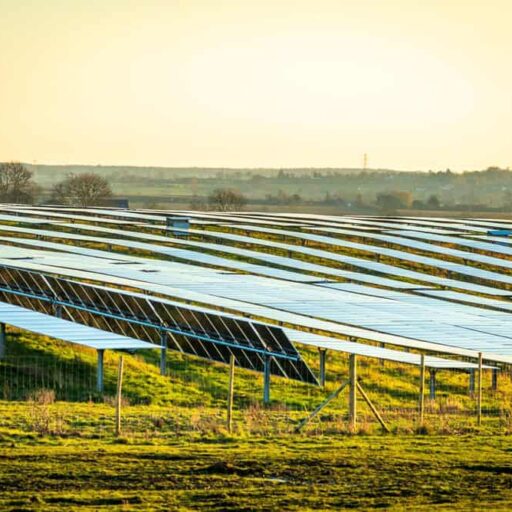
A false claim being used by some opposition parties in the UK to build a case for scrapping net zero targets has been debunked by new research.
The Conservatives and Reform have both suggested that the UK’s net zero target should be scrapped amid claims that other nations are not joining it in the race to cut emissions.
However, fresh data debunked that this week, showing that 71% of countries have net-zero targets. In fact, according to Carbon Brief, which led the research, the only countries without net-zero targets among the world’s top 20 emitters are the US and Iran.
“If the UK were to scrap its net-zero target [as called for by both the opposition Conservative party and Reform UK], this is the group of major emitters it would be joining,” it noted.
The UK was the first major economy to set a net-zero target in 2019. According to the Net Zero Tracker, around 74% of global emissions are now covered by some kind of national net-zero target.
Image: Jevanto Productions
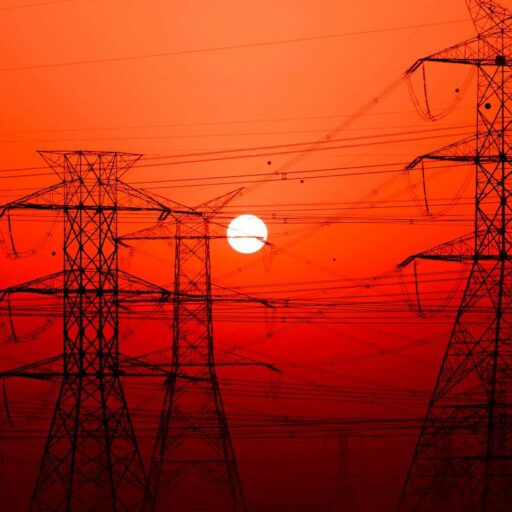
The rapid rollout of renewables in the UK is “eroding the influence of expensive gas, helping to suppress power prices”, fresh data shows.
The UK, a major fossil fuel importer, has some of the world’s highest energy bills due to its exposure to volatile oil and gas prices. However, according to a report from the thinktank Ember, wind and solar are helping the UK become less exposed to the fossil fuel rollercoaster.
Ember suggests that 15% of UK power generation has been decoupled from gas prices already – a figure set to rise to 36% by 2030. Its research is backed by a separate report from Carbon Brief, which said that wind and solar had shielded the UK from gas imports worth £1.7bn since the war in Iran began.
Rising energy prices have led to calls for more drilling in the UK’s North Sea oil fields. However, analysis suggests that this would not reduce bills, whereas ramping up homegrown green energy would.
“Renewables are already helping keep wholesale power prices under control,” said Ember’s senior energy analyst Frankie Mayo. “Amid daily volatility, a more stable future for the power system is gradually emerging.”
Image: Dhahi Alsaeedi

There were raised eyebrows among the rhododendrons this week as a garden created by a sex toy company won an award at London’s Chelsea Flower Show.
Aphrodite’s Hothouse, “an immersive houseplant studio inspired by love, lust, beauty and desire”, is a cheeky horticultural statement from award-winning botanical designer James Whiting and the sexual wellness brand Lovehoney.
Inspired by Aphrodite and Eros, the Greek gods of love and desire, the studio heaves with lush plants and sensual symbolism. It’s all rather racy for the usually prim Chelsea Flower show, but it has a serious mission: to make conversations about sex and intimacy as natural as talking about the roses.
“Hothouse is designed to spark curiosity, challenge expectations, and celebrate pleasure as something natural, playful and culturally relevant,” said Lovehoney’s Jo Connarty. “If we want to change the conversation around sex and sexual wellness, we can’t keep having it in the same places.”
It’s a message that seems to have resonated with the garden winning a coveted gold medal at the show. Said Whiting: “Gardens should spark curiosity, break a few taboos and make people stop in their tracks.”
Image: Lovehoney

What would it be like if the media reflected what actually matters to you?
That’s the question we’re exploring at Positive News – and we’d love your help answering it by taking part in our flagship values survey.
The survey will reveal your personal values profile, providing a snapshot of what matters most to you, using a long-established framework developed by social psychologists.
By understanding what unites our community, our team will shape a media organisation that more consciously reflects those shared values. Read more about our listening project here, and take the survey here.
Main image: Shutterstock
Get your weekly fix of good news delivered to your inbox every Saturday, by signing up to the Positive News email newsletter
Be part of the solution
At Positive News, we’re not chasing clicks or profits for media moguls – we’re here to serve you and have a positive social impact. We can’t do this unless enough people like you choose to support our journalism.
Give once from just £1, or join 1,800+ others who contribute an average of £3 or more per month. Together, we can build a healthier form of media – one that focuses on solutions, progress and possibilities, and empowers people to create positive change.