Kosovo was finally cleared of landmines, Germany set a date for quitting fossil fuels, and a new cat species was discovered, plus more good news
This week’s good news roundup

Some 27 years after the Kosovo War ended, a humanitarian mission to clear the country of landmines has concluded.
The Halo Trust, a mine-clearance charity, announced this week that its work in the country was done, claiming the cleared land has “paved the way for Kosovo’s recovery”.
More than 800,000 people were displaced during the Kosovo War (1998-1999). When refugees returned home, they found a ravage landscape littered with mines. According to the Halo Trust, 150 people were killed or injured by mines in the first month alone.
Kosovo is a different place today. Cleared land has paved the way for agriculture and infrastructure projects, helping the country’s post-war economy to flourish. According to the World Bank, average life expectancy is now 78 – just one year less than it is in the US.
“Kosovo shows us that the real impact of removing landmines and cluster bombs is not measured in hectares cleared, but in what that land makes possible over time,” said Atholl Stewart, programme manager for Halo Kosovo.
Halo’s workers from Kosovo are now leading the charity’s operations in Syria and Ukraine.
Image: uskarp

The global goal to protect 30% of the planet by 2030 is within reach, but governments must accelerate action to achieve it.
That’s according to a major review of the policy, published this week. It found that around 20% of land and inland waters are already designated protected. Existing commitments, it adds, would increase that to 27% by 2030 – just shy of the target.
“Real progress is being made,” said Brian O’Donnell, director of Campaign for Nature. “Countries have expanded protected and conserved areas around the world – safeguarding critical ecosystems such as forests, wetlands, and mangroves.”
However, the Global Assessment 30×30 report warns that progress at sea is much slower. It finds that just 10% of the ocean is designated protected – a gap authors say could be closed by the High Seas Treaty (more on that below), which gives nations new powers to protect waters outside of their national boundaries.
Enforcing protected areas is another challenge. The report warns that bottom trawling and other damaging practices are still happening in many conservation zones.
O’Donnell called on governments to accelerate action and reframe the 30×30 target “not only as a conservation imperative, but as an investment in economic resilience, climate stability, food and water security, health, and long-term prosperity”.
Image: iStock
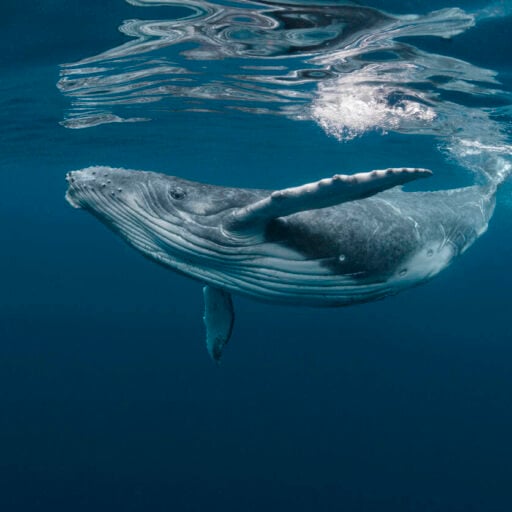
“The world is uniting around ocean protection even in divided times,” campaigners said this week, as the number of nations to ratify the High Seas Treaty reached 100.
Australia, Brunei, Canada, Germany, Papua New Guinea and Zimbabwe are the latest countries to ratify the treaty, which entered force in January. It provides the world’s first legal framework to conserve life on the high seas, which covers nearly half the planet’s surface. Currently, less than 1% of international waters are fully protected.
“In many cultures, the number 100 carries real weight – whether it is a marker for age, an anniversary, or a symbol of luck and prosperity. For the High Seas Treaty, it marks the real momentum of the world uniting around ocean protection, even in divided times,” said Rebecca Hubbard, director of the High Seas Alliance.
Hubbard called on more countries to ratify, and urged those that have done so to turn the “wave of support turns into real decisions”.
Image: Craig Lambert

A simple new test could prevent thousands of women from having painful, invasive checks for womb cancer, doctors said this week.
Currently, women who are tested for the disease undergo internal ultrasound scans, a biopsy of the womb lining and hysteroscopy, which involves sending a camera into the womb. All are invasive to patients, and costly to health services.
The new test could change all that. Developed by the University of Manchester, England, it detects cancer by looking at cells collected from urine and vaginal fluid. In a trial involving 1,864 women, it identified more than 80% of cancers and was 98.8% accurate in ruling out the disease.
Women who experience bleeding after the menopause are most likely to benefit from the test. While only 5% to 10% of them ultimately have cancer, all are given referrals to test for the disease.
“Our study shows that a simple test using urine and vaginal samples could help identify the women most likely to have cancer while safely reassuring many others much earlier in the diagnostic pathway,” said Prof Emma Davidson.
“If further studies confirm these findings in routine practice, this approach has the potential to transform care for thousands of women every year.”
Image: Drazen Zigic
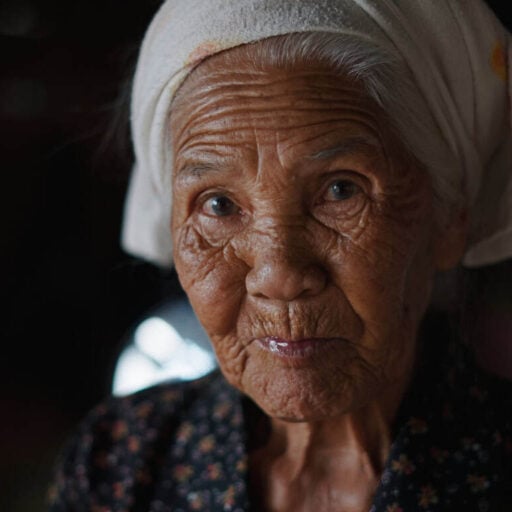
Rubella is no longer a public health problem in Thailand, according to the World Health Organization (WHO), which described the achievement as a “major milestone”.
Also known as German measles, rubella is a contagious viral infection, which, if caught during pregnancy, can cause miscarriage, stillbirth or congenital rubella syndrome – a condition associated with lifelong birth defects.
The disease can, however, be prevented by vaccines, which have helped Thailand reach the milestone. The country joins a list of more than 130 other nations which have eliminated rubella as a public health problem.
“Thailand has shown that rubella elimination is achievable when strong political commitment, resilient immunisation services, high-quality surveillance and community trust come together,” said the WHO’s Dr Nilesh Buddha. “This … brings the region closer to eliminating both measles and rubella.”
Image: Francisco Javier Mares Guardiola
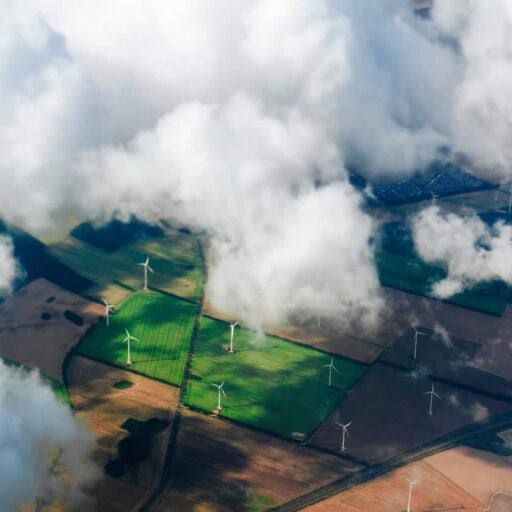
In a significant policy shift, the German government has committed to phasing out fossil fuels by 2045.
On Wednesday, it published a roadmap to “transition away” from coal, oil and gas. Plans include ramping up renewables, accelerating the rollout of electric vehicles and cutting methane emissions by 30% – in accordance with the global methane pledge agreed at Cop26.
It’s likely to be a bumpy road. Amid fierce debate about the country’s green policies, many politicians want to see greater flexibility on vehicle emissions to help struggling German car manufacturers.
Targets are one thing, of course, meeting them is another. According to the Climate Action Tracker, Germany is already off track to meet its existing obligations.
Still, its latest intervention comes amid a wider shift in rhetoric around fossil fuels. While obstructive petrostates blocked any mention of phasing them out in the final text at last year’s Cop30 climate conference, some nations have broke rank to establish their own exit strategy.
Image: Thomas Richter

People will be able to seek a second opinion if they’re concerned about the care their loved ones are receiving at A&E wards in England, after it was announced that Martha’s Rule will be rolled out across the country.
The patient safety scheme is named after Martha Mills, who died of sepsis in 2021, aged 13. Her mother Merope campaigned for patients and their families to be given the right to request an urgent review of their care, after her concerns about Martha were ignored.
According to England’s National Health Service (NHS), 4,906 calls were made to Martha’s Rule helplines at hospitals trialling the scheme between September 2024 and June 2025. Of those, 241 led to “potentially life-saving interventions”.
Martha’s rule was subsequently introduced to all acute care wards in England. This week, NHS England said it will be rolled out to all A&E wards as well.
The move was welcomed by the NHS Alliance, the independent body representing the health care system. “This will enhance the safety of care and will provide reassurance for patients and their families,” it said.
Image: Drazen Zigic

A cat that was initially presumed to be a stray moggy has been confirmed as an entirely new species.
The discovery was made in the Yungas cloud forest in Bolivia. Scientists initially thought the cat – mistaken for a stray by the person who found it – was a northern tiger cat.
However, while it looks similar with its leopard-like spots, DNA tests showed it to be a species of its own. It’s the first new cat species discovery in more than 100 years.
The mysterious individual is currently the only confirmed living member of the Tilcayo cat family.
“Describing a new cat species after more than 100 years shows how much we still have to learn about the biodiversity around us,” said Paola Nogales-Ascarrunz, a scientist from Universidad Mayor de San Andres in La Paz, Bolivia.
“But it also reminds us that we need to protect the Yungas forests, which are home to so many species – including some we are only beginning to understand.”
Image: Paola Nogales Ascarrunz
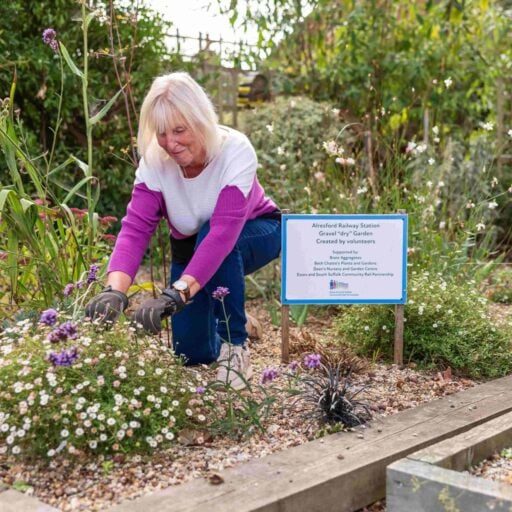
Around 1.8bn journeys are made by train each year in Britain, with many passengers travelling through a station that’s been beautified by volunteers.
Honouring this growing trend is the Royal Horticulture Society (RHS), which this week announced the inaugural winner of its new Railway Stations in Bloom award.
First prize went to Scotland’s Cardross Community Organic Garden, which has transformed Cadross station into a veritable oasis, complete with raised beds and a model train made out of old whisky barrels. The displays bloom with flowers, fruits and vegetables, and have transformed what were once grey spaces.
The RHS praised volunteers for creating a public garden that’s “deeply rooted in, and reflective of, the surrounding community”, and commended volunteers for “strengthening community pride and showcasing the area’s unique identity”.
Related: The growing movement to rewild scruffy urban spaces
Image: Alresford railway station, Essex, was one of the nominees. Credit: RHS/Oliver Dixon
Main image: BrilliantEye
Get your weekly fix of good news delivered to your inbox every Saturday, by signing up to the Positive News email newsletter
Because the world needs it
Positive News reports on the people and ideas driving progress. We believe that giving attention to solutions helps them spread.
Our journalism is independent and powered by our readers. There are no media moguls or shareholders extracting profits: your contribution funds our work to investigate what’s working, understand why, and bring those stories to a wider audience.
If you value a fuller picture of what’s happening in the world, please become a Positive News supporter today.